




I. Electronic Police / High-Definition Bayonet Systems
1. Red Light Violation Detection & Recording
The system automatically recognizes traffic signal status via video analysis. Upon detecting a vehicle passing the stop line during a red signal, it instantly captures and stores high-definition images documenting the violation locally.
2. Wrong-Way Lane Violation Detection & Recording
Using real-time video analysis of vehicle trajectories, the system accurately identifies infractions such as straight-moving vehicles turning left or right, right-turn lane vehicles proceeding straight or turning left, and left-turn lane vehicles going straight or turning right. Clear images capturing the incorrect lane usage are recorded.
3. Illegal Lane Line Crossing Detection & Recording
The system automatically captures three images at different positions to document the process of a vehicle crossing solid lane lines or driving in non-designated lanes. At least one image clearly displays the license plate.
4. Reverse Direction Driving Detection & Recording
Through video tracking technology, the system monitors and tracks each vehicle, directly detecting and capturing vehicles traveling against the designated flow of traffic while simultaneously recognizing their license plates.
5. Unauthorized Use of Non-Motorized Lane Detection & Recording
Based on vehicle trajectory tracking and analysis, the system detects and records vehicles illegally driving in bicycle lanes or emergency lanes. Captured images include critical enforcement elements such as prohibitory signs, lane markings, vehicle position, and license plates.
6. Illegal Parking Detection & Recording
Using video analytics, the system identifies traffic signals, detects and tracks vehicles, and monitors abnormal events. It analyzes vehicle behavior to generate alerts for traffic incidents such as vehicles stopping in intersections during green signals or traffic congestion, providing accurate real-time intersection status to traffic managers.
7. Motorcycle Recognition & Capture
In response to the high proportion of motorcycles in some urban areas and the rising incidence of motorcycle-related offenses, the system incorporates specialized motorcycle recognition and capture capabilities. Results are categorized and stored separately as motorcycle-type data. The backend management platform supports vehicle search and retrieval by time, location, and direction, assisting public security authorities in investigating motorcycle-related violations and crimes.
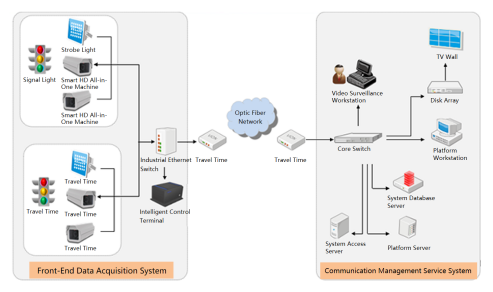
Topology Diagram of Smart Checkpoint E-Police System
II. Pedestrian Red-Light Violation Monitoring System
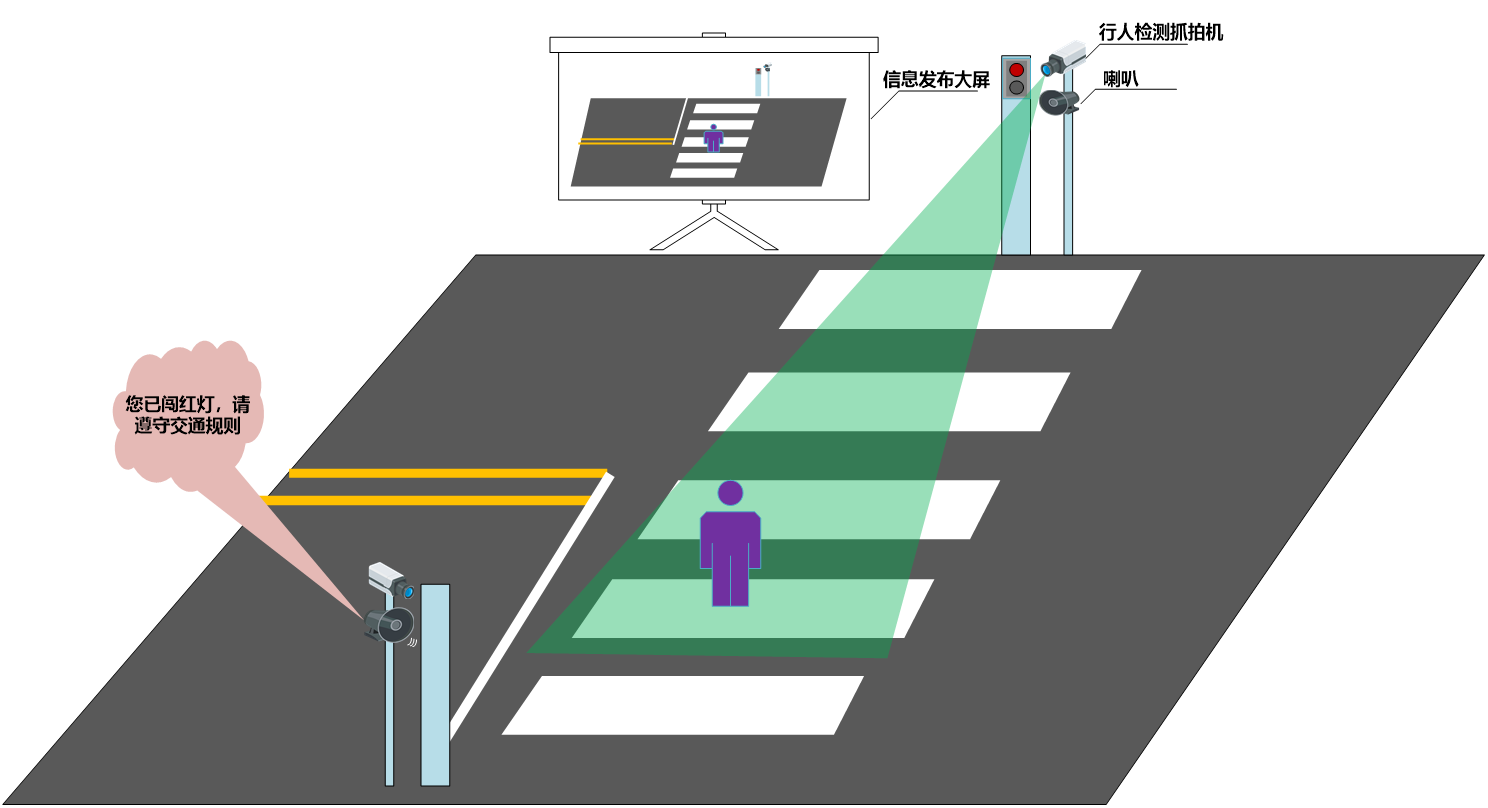
This system enhances compliance with traffic regulations among pedestrians and non-motorized vehicles, effectively reducing red-light violations. The solution integrates three core components: user-friendly audio alerts, automated violation capture, and consistent enforcement, creating a comprehensive framework to deter unsafe crossings. It also supports flexible educational measures for violators.
Widely deployable at major urban intersections, the system demonstrates significant effectiveness in improving traffic safety. Beyond regulating pedestrian and cyclist behavior, it serves as a visual deterrent for motorists. It specifically addresses dangerous behaviors such as vehicles accelerating through crosswalks during turns instead of yielding. Equipped with continuous video recording and storage capabilities, the system provides valuable evidentiary support for traffic management authorities when investigating incidents.
III. Unmanned Aerial Vehicle Enforcement Platform
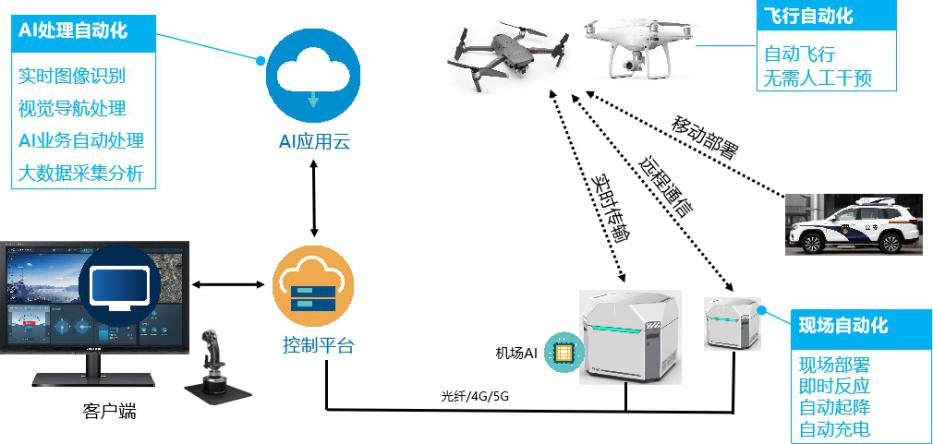
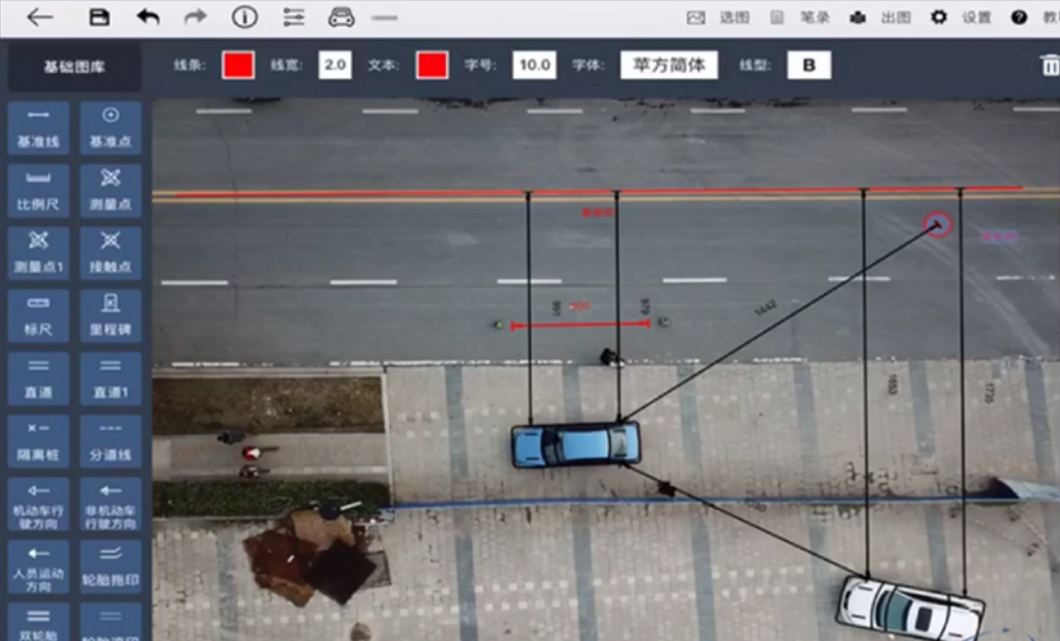
The UAV Traffic Enforcement Platform utilizes unmanned aerial vehicles equipped with high-definition cameras and AI recognition technology to monitor traffic violations, collect evidence, and support remote incident management from an aerial perspective. This innovative approach creates an integrated air-ground coordination system, shifting enforcement from traditional ground-based patrols to an overhead vantage point. This significantly expands operational coverage and improves enforcement efficiency.
Operating within a comprehensive regulatory framework, this platform has been widely deployed across numerous cities, demonstrating substantial improvements in traffic management effectiveness and operational capability.
IV. Section Speed Enforcement System
The Section Speed Enforcement System calculates a vehicle's average speed over a defined stretch of road by measuring the time it takes to travel between two fixed points. The system utilizes license plate recognition technology to record entry and exit times, with the travel distance being the predetermined length between these points and the travel time being the difference between the two recorded timestamps.
Deployed on critical highway segments, this system operates 24/7 to automatically detect, capture evidence of, and facilitate penalties for speeding violations. This enhances road safety by reducing accident rates and achieves intelligent traffic control.
Speed Measurement Methods:
Inductive Loop: Requires road surface excavation for installation, causing significant disruption.
Radar-Based: Offers high accuracy and is the most widely adopted method for section control.
Video-Based: Provides relatively lower accuracy compared to other methods.
By integrating the strengths of radar-based speed detection and bayonet capture systems, the solution enables rigorous enforcement of speed limit compliance on high-speed roadways.



 苏公网安备 32011502011140号